
Van Gogh was no stranger to unconventional love. He first fell into an unrequited love with his second cousin, Caroline Haanebeek, who ended up marrying someone else.
After Caroline, he proposed to another cousin, Kee Vos-Stricker. Everyone opposed Van Gogh’s pursuit of Kee, and her father tried to convince him to forget her. They viewed his affection as inappropriate, but Van Gogh had fallen deeply in love with her during the summer of 1881 and his love proved to be unrelenting. They had both been staying with his parents in Etten at the time, but she was recently widowed and did not reciprocate his feelings.
After Kee, Van Gogh fell in love with yet another unconventional match, a pregnant prostitute named Sien Hoornik. Once again, the family, including Theo, strongly disapproved. It was not only because of her work, but also because they did not want them living together unmarried. She was also Catholic and had a young daughter, which did not help his case. In 1883 Van Gogh decided he wanted to marry Sien as well, but with a push from his family, he eventually left her behind.
In 1884 came Van Gogh’s next relationship with Margot Begemann, who was ten years older than him. Van Gogh wanted to marry Margot, but her parents and sisters strongly disapproved. She suffered from serious anxiety attacks and was mentally unstable, which was one of the main reasons her family was so against the union. When she discover their disapproval, she attempted suicide by poision. The event largely contributed to the end of her relationship with Van Gogh.
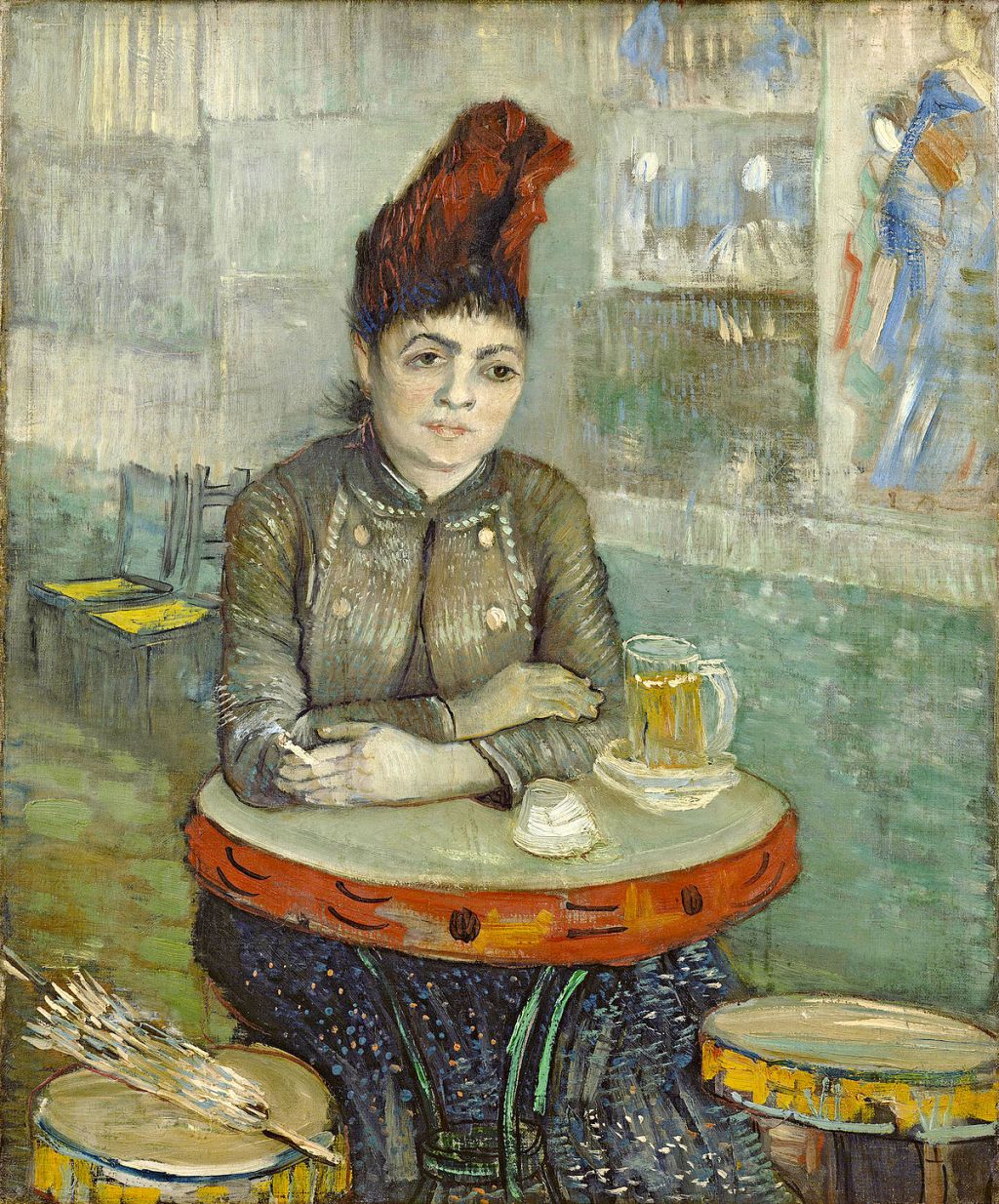
Finally, Van Gogh fell in love with Agostina Segatori in Paris. He painted her in her cafe call Le Tambourin:

In the Cafe: Agostina Segatori in Le Tambourin 1887
Several details within this painting make it a controversial artwork, much like Van Gogh’s love life. The Cafe is painted with a strangely colored glow, and Agostina’s hat appears to merge with her hair. The painting takes on a dreamlike quality, with her face being the only part in focus. This dreamlike mirage positions Agostina as a very unconventional woman since drinking and smoking in a cafe was seen as highly inappropriate for ladies. The painting even alludes to this being her second beer because of the saucers under her glass. At the time, this way of depicting a woman would have been associated with prostitutes and artistic types. Agostina also owned this cafe, and allowed Van Gogh to sell the Japanese prints he had collected. She often posed for many other artists as well. Agostina was even known to trade meals in exchange for paintings with Van Gogh. The two shared a brief relationship that ended badly, causing Van Gogh’s resignation from love. He even blamed this painting because he thought art could cause you to lose real love.
Some also speculate that his friendship with Gauguin during their stay at the Yellow House could have been more than friendly, however it is not possible to say for certain.
 Amsterdam In Tour
Leave a comment